Showing posts with label JD Power. Show all posts

Wednesday, October 2, 2013

The Best Ways to Make Your Tires Twinkle


We love our cars.  SUV’s, coupes, sedans, mini-vans…they’ve all become an integral part of our busy lifestyles.  We know that you take pride in your vehicle, giving it the routine wash, occasional ‘spit’ shine when necessary, but it’s always been difficult to clean one location efficiently.  The tires!  In today’s blog, we’ve got a couple options for you to choose from.

Spray-On

The Spray-on method is an easy to use solution in a bottle with a sprayer and nozzle on top.  Basically, you apply the spray directly to the tires, making sure to not spray TOO close.  By using a sweeping motion to cover a large area, you can achieve a nice wet glossy look to your tires.  What’s the only downside?  The spray-on sheen can sometimes leave stains on the side of your car from an outside breeze.  We recommend using it inside a garage or putting the liquid on a sponge and applying it manually. 

Gel

When compared to the spray-ons of the world, a gel seems to last longer, enabling a lasting effect with tires over time.  You’ll need an applicator, and a sponge for this method.  The gel gives a nice black color to tires without the ‘gloss’ effect.  You can achieve a glossier look by applying a second coat of gel, just be sure to wait a few minutes for the gel to dry, as it could attract dirt if it’s driven on too quickly. 

Foam

Foam Tire shine also comes with it’s own spray bottle and the easiest to apply.  This type also cleans off the dirt from your tires.  Just apply the foam and wipe it after it sits idle for a couple of minutes. However, be careful with some products that may turn your tires brown or yellow. Some tires really do not agree with certain tire shine products so you may have to try a new product.

Have a tip for us to add?  Let us know below!

Wednesday, September 25, 2013

Top Vehicle Innovations of the Century


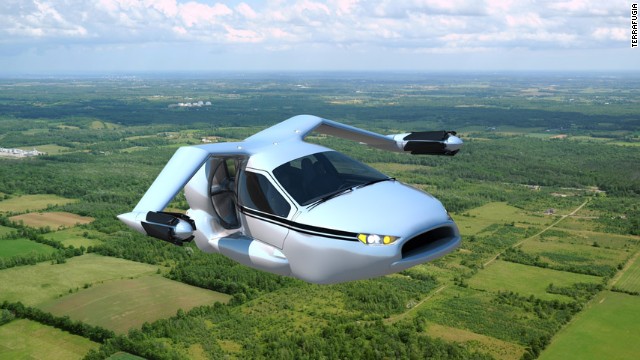
Flying cars have always been something we would like to see in our lifetime, but…for now, we’ll have to settle for some really cool, helpful, innovations.  Cars have gone a long way since the Ford Model-T and in today’s blog we discuss some of the most influential technologies to date.

Fold-flat rear seats – Honda’s foldaway seats in the late 1990’s took the concept of space saving to another level.  Seats that tuck out of the way are much easier to deal with than those that have to be removed.

Electronic Stability Systems – introduced by luxury manufacturers BMW and Mercedes-Benz in 1995, this computerized system applies the car’s brakes or cuts the throttle to keep the car going where you want it.  This maintains car stability, working within the car’s limitations.

DVD Players – In 2002 Honda and Saturn introduced the DVD player, children in the backseat of minivans rejoiced.  Innovation?  Very much so.  DVD players were shrunk and fitted into vehicles, providing a smooth comfortable ride, minus the bickering siblings in the background. 

Do you have any innovations you would like to add to the list?  There are countless other options available, add yours now!

Wednesday, September 18, 2013

How to Get Your Windshield Chip Repaired


Rocks, road debris, hail, ice, and many other objects can cause your windshield to chip or crack.  Although these images may look harmless, left in disrepair, these windshield chips can cause your windshield to crack and become unsafe.

As long as the chip or small crack (less than 6 inches) is not in the direct line of site of the driver (or what is known as the critical area), it may be repairable, potentially saving you hundreds of dollars.  Some insurance companies will actually pay for the repair of windshield chips or small cracks, waiving your deductible.

The windshield repair technician will first drill a small hole into the rock chip.  Then, the technician will apply vacuum pressure onto the hole.  An injection of resin is made into the windshield chip hole.  Once the resin has been injected, the technician cures the resin by utilizing an ultraviolet light.  Once cured, the excess resin is removed from the repair and the windshield in cleaned.  The repaired windshield is no longer in danger of cracking further from this chip.  You may, however, notice some distortion at the point of the repair as the resin will not be perfectly clear, but it is structurally safe. 

Left in disrepair, your windshield chip will develop into a crack and most likely will end up ruining your windshield.  Temperature variations, car washes, or even extreme temperatures can cause your chip to turn into a large un-repairable crack.  The sooner the repair is completed, the better the results will generally be.  Dust, debris and moisture can settle into the crack and cause blemishes or discoloration.

Most people do not realize that the windshield of your car, truck or van is an important structural component of your vehicle.  Therefore, a quality installation is essential to maintain that structural integrity.  Using the most advanced materials, such as a quality adhesive, is a critical element in the windshield installation process.

Wednesday, August 14, 2013

How Much Does An Electric Vehicle ACTUALLY Cost to Maintain?


The Jetsons is the first thing that comes to mind when I think of electric vehicles, not necessarily a floating utopia equipped with flying cars, but it’s definitely a wave of the future.  With countless manufacturers rolling our production vehicles and prototypes, it’s not difficult to get lost in the shuffle.  We’ve heard the conversation around electric vehicles: they’re quiet, cheap to maintain, and environmentally friendly.  Lets delve a bit deeper and get the actual price of maintaining one.

According to Edmunds: to figure out the cost of fueling an EV, start with the electric car's energy consumption rate, which is expressed as kWh per 100 miles (kWh/100m). This figure will be listed on the EPA's upcoming EV fuel economy label (the 2011 Leaf's preliminary label is shown here, complete with an erroneous 12-cent per kWh figure in the cost estimate that Nissan says it is correcting). The next figure is your home electric rate, assuming that's the primary charging site. Multiply the kWh/100m figure by the electric rate to get the cost per 100 miles. For instance, the Leaf's kWh/100m figure is 34. If electricity is 11 cents per kWh — the national average — it would cost $3.74 to go 100 miles.

Utility companies, and the time and level of use set the electricity cost.  You pay more for kWh at peak hours, making a lot of electric commuters pay more than the national average of 11 cents per kWh.  How do real individuals save on their electric vehicles? 

Tom and Cathy Saxon have two electric vehicles.  They installed separate electric meters for their EVs (electric vehicles) in July 2009 and have been tracking them since then.  The Saxton's Tesla is consuming at a rate of 30.8 kWh/100m (bettering its official EPA rating); the RAV4 is averaging about 35 kWh/100m.  They pay an average of 11.25 cents per kWh.  In other words, they drive about 30 miles on a dollar’s worth of electricity, it would be much more expensive to drive with gas.  Results do vary, depending on a couple factors like when and where you’re charging, but the true cost of filling up is a tad more complicated than expected.


Wednesday, August 7, 2013

7 Facts About Texting That Can Save a Life


Multitasking has increased in the last few years to astronomical heights.  With one hand and a smartphone you can watch a YouTube video, send an email, play a game, voice chat and place a call in a five-minute span.  However, with much power comes much responsibility because NOW that we have this access 24-7, it has carried over into our driving habits. 

For some time, researchers have been telling us to focus only on driving, quoting a greatly increased chance of accident, injury and death when we distractedly call a friend or answer a ringing cell phone.

Now, new research has revealed the most dangerous driver distraction of all: texting.

A study by the Virginia Tech Transportation Institute, along with prior studies by Liberty Mutual Insurance and state-funded organizations located online, reveals the shocking statistics of texting behind the wheel:

1.    Texting while driving increases the risk of accident 23.2 times over unimpaired driving.
2.    Texting while driving results in longer response times than even drunken driving. While an unimpaired driver can respond quickly to changes in traffic and begin braking within half a second, a legally drunk driver needs four additional feet to begin braking—and a driver who’s texting needs 70.
3.    In the moments before a crash or near crash, drivers typically spend nearly five seconds looking at their mobile devices—enough time at typical highway speeds to cover more area than the length of a football field.
4.    Though 95 percent of drivers surveyed said texting behind the wheel was unacceptable and unsafe, at least 21 percent admit to doing it anyway.
5.    Especially amongst teens, texting results in erratic driving behavior, like lane weaving and speeding up and down, increasing the likelihood of hurting pedestrians and running into other vehicles.
6.    Texting behind the wheel is generational: 37 percent of drivers 18 to 27 admit to texting while driving, compared to 14 percent of 28 to 44 year olds, and 2 percent of 45 to 60 year olds.
7.    An accident can happen in two to three seconds while texting.