Showing posts with label Audi Dealership. Show all posts

Thursday, February 13, 2014

What Not To Do at a Stoplight.


What Not To Do at a Stoplight.


Remember the days when you stopped at a traffic light, not a care in the world, before we all felt the need to be doing multiple things during every moment?  These days, we’re all guilty of trying squeeze in every little thing at a stoplight. The truth is, it may not be saving us time. A lot of people are focused on anything but the road. When you become so engrossed in something else that you forget to be aware of your surroundings it can cause time loss, create traffic problems and jeopardize safety. 

Whatever is distracting you can’t be that important that you forget you’re behind the wheel. Driving is a privilege and a responsibility to yourself and to others around you.  There’s a lot of precious cargo travelling around daily.

Being alert to where you are in line and the traffic patterns is helpful. Don’t be the person everyone’s honking at because the green arrow expired while you completed that Facebook status update. So when you’re in a hurry and you’re behind “that person” and the tables are turned, remember to set an example by changing your behavior and not be mad. People are more likely to mimic what they see rather than what their told.

Some of the examples that follow are more common and familiar offenders while some are plain ridiculous. You know who you are. There are usual suspects like texting, posting, playing video games and tearing the car apart in search of something that fell between the seats. Then there are those who change clothes, get out and rifle through the trunk, put on make up, dry shave, give over zealous affection, read, watch a movie on an overhead DVD player, cut their toe nails, paint their toes or try to figure out directions. What’s the strangest thing you’ve seen?

It’s ok to do certain things at a red light so long as you’re not oblivious to everything else around you. So if you must do it, glance up and around you frequently so you’re ready when the light changes. Kind of like checking your rear view mirror when you’re driving. It will eventually become a good habit.

If something is really so important that it’s distracting you from driving, it’s probably in everyone’s best interest that you pull over and resolve the issue before continuing on. A little preparation before departing can alleviate much of the strange behavior we observe at traffic lights.

People tend to think things won’t happen to him or her.  Until it does.  That’s when the resolution is made NOT to do whatever caused a problem again. Don’t let it happen at all. Let’s all try to be more courteous and aware on the road. Together we can improve our environment and interactions while arriving safely and happily at each destination.


Wednesday, January 15, 2014

How to Simplify Your Driving Life


Resolutions do not only pertain to yourself, but also concern your vehicle. This year, take the time to not only think about how you can better yourself, but also how to can make your vehicle more efficient, clean, and running steady. Here a few useful tips to help your vehicle and to bring in the New Year.

1.     Take the time to organize
By keeping your vehicle clean you will be able to keep organized and will help to start the New Year off on the right foot.
2.     Be a more cautious driver
We all know to well when we are driving that there are many other motorists who are not as careful. Take the time to take a second look and slow down when driving.
3.     Ease on the road rage
Everyone wants to start the New Year off on the right foot, but screaming at the vehicle in front of you is not always the best way to begin. Take a depth breath and take the time to look at your actions before you cause an accident.
4.     Check your tire pressure
Take the time to check the air pressure in your tires cannot only help to save on gas mileage, but also can prevent serious issues such as a blowout.
5.     Schedule for regular checkups
Taking your vehicle into the shop can help prevent further issues and will keep your car running smoothly throughout the entire year.

By taking the time to follow these small resolutions throughout the year, will help keep your vehicle and you happy throughout the New Year.

Wednesday, October 16, 2013

Keep Your Lil’ Ones Safe: Car Rules to Abide By


Remember being strapped in what resembled a parachute harness, in the abysmal backseat?  You’re next to an annoying sibling who feeds off of the pleasure he/she receives when giving you a “wet willy.”  You’re helpless because you can hardly move forward in your newly revamped booster seat, as it crushes your shoulders back into the seat.  It’s the most uncomfortable seat known to man, and at 5 years old it’s like a cage to a wild animal, but when it comes down to it, you’re safe.  Thousands of children’s lives are jeopardized in car related accidents.  In today’s blog we provide a couple tips to keeping your lil ones safe.   

1.    SUVs aren’t safer: It’s BIG, bad, and menacing, but SUVs are no safer than ordinary sedans.  They’re more likely to rollover.  The safest vehicles are low to the ground and larger (station wagons).

2.    A car does NOT have to move to be dangerous: Parked cars are also, surprisingly deadly.  As many as 220 children per year are killed in non-traffic auto accidents.  Some are strangled by a window when they’re leaning out, inadvertently leaning on the rocker-type power window switch.  Other children, when alone, release the emergency brake, setting the car in motion.  Finally, at least 30 kids die each year when their parents leave them in the car and they suffocate from overheating. "Children should never, ever be left alone in an automobile -- not even for a minute," says Terrill Struttmann, executive director of Kids in Cars, an education and advocacy organization he and his wife started after their 2-year-old son was killed by a car set in motion by two kids playing alone inside.

3.    Kids don’t need to be inside a car to be hurt by one:  nearly 400 children are killed each year when they’re hit by an automobile.  ALWAYS keep an eye on your little ones, no matter how many times you’ve warned them to stay out of the streets.  A survey conducted by Safe Kids Worldwide found that a majority of drivers speed in school zones, and that nearly a third violate stop signs in neighborhoods where there are kids.

Do you have any tips of your own?  Feel free to comment below:


Wednesday, September 25, 2013

Top Vehicle Innovations of the Century


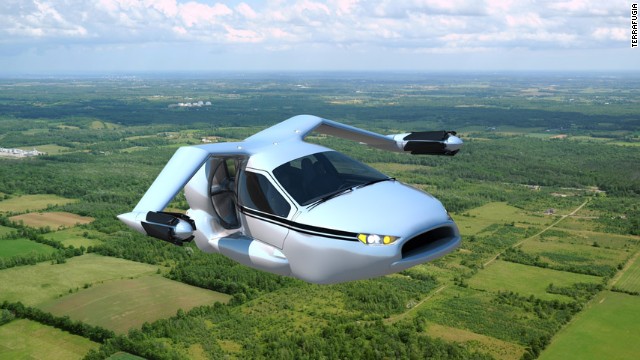
Flying cars have always been something we would like to see in our lifetime, but…for now, we’ll have to settle for some really cool, helpful, innovations.  Cars have gone a long way since the Ford Model-T and in today’s blog we discuss some of the most influential technologies to date.

Fold-flat rear seats – Honda’s foldaway seats in the late 1990’s took the concept of space saving to another level.  Seats that tuck out of the way are much easier to deal with than those that have to be removed.

Electronic Stability Systems – introduced by luxury manufacturers BMW and Mercedes-Benz in 1995, this computerized system applies the car’s brakes or cuts the throttle to keep the car going where you want it.  This maintains car stability, working within the car’s limitations.

DVD Players – In 2002 Honda and Saturn introduced the DVD player, children in the backseat of minivans rejoiced.  Innovation?  Very much so.  DVD players were shrunk and fitted into vehicles, providing a smooth comfortable ride, minus the bickering siblings in the background. 

Do you have any innovations you would like to add to the list?  There are countless other options available, add yours now!

Wednesday, August 28, 2013

How to Survive Traffic During the School Year


School is back in effect for most students!  After a swift summer, our children are on their way back to the learning cave, provided they’re given a backpack on all the tools necessary to make their journey.  Now that the kiddies are safe and sound on school grounds, you can breathe easy…in that respect, at least.  Now, you have to navigate around school zones, more traffic and insane drivers.  However, you’re in luck!  Today, our blog provides ways to avoid the traffic of school zones, pedestrians and cranky motorists!

The average commuter lost 34 hours or a full workweek because of traffic in 2009, according to the latest Urban Mobility Report.  In larger cities, traffic increases from office parks being built on rural land and the lag of mass transit continues to add fuel to the fire. 

Avoid the Traffic!

Trapster, a free iPhone application allows drivers to scan the area for known speed traps, police hangouts, speed cameras or even stop-light cameras.  Using the GPS capabilities in your smart phone it uses reported speed traps in Trapster’s network database to give voice alerts of approaching traps.  This technology is due to a network of over 5 million Trapster users that constantly contribute trap locations.   

Having Trouble Finding Your Car in the School Parking Lot?

Car Finder Plus is an app that records your position when you leave your car, tracking your location in the process.  The GPS stores this location and when you’re looking for your vehicle after running your errands it provides a display of where to locate your car.   

Avoid High Gas Prices, Take the Short Road:

GasBuddy is a lifesaver for savvy individuals with a frugal mindset.  Gas changes fluctuate at the drop of a hat, sometimes varying as much as 20% within a couple city blocks.  GasBuddy is a comprehensive source for up to date gas prices.  The app lays out prices on a map and allows the user to choose one that fits their budget.  Priceless.

Wednesday, August 21, 2013

Our Top 5 Instagram Pics of August


Once in a while, we find a picture on Instagram that’s worth sharing.  It’s usually a snippet of perfection, framed by the small screen of a smartphone.  Check out our FAVORITE Instagram photos of August in our newest blog post below: 

 
@alikhammmassi 

@fashionkidsdr

@gadabi
 

Wednesday, August 14, 2013

How Much Does An Electric Vehicle ACTUALLY Cost to Maintain?


The Jetsons is the first thing that comes to mind when I think of electric vehicles, not necessarily a floating utopia equipped with flying cars, but it’s definitely a wave of the future.  With countless manufacturers rolling our production vehicles and prototypes, it’s not difficult to get lost in the shuffle.  We’ve heard the conversation around electric vehicles: they’re quiet, cheap to maintain, and environmentally friendly.  Lets delve a bit deeper and get the actual price of maintaining one.

According to Edmunds: to figure out the cost of fueling an EV, start with the electric car's energy consumption rate, which is expressed as kWh per 100 miles (kWh/100m). This figure will be listed on the EPA's upcoming EV fuel economy label (the 2011 Leaf's preliminary label is shown here, complete with an erroneous 12-cent per kWh figure in the cost estimate that Nissan says it is correcting). The next figure is your home electric rate, assuming that's the primary charging site. Multiply the kWh/100m figure by the electric rate to get the cost per 100 miles. For instance, the Leaf's kWh/100m figure is 34. If electricity is 11 cents per kWh — the national average — it would cost $3.74 to go 100 miles.

Utility companies, and the time and level of use set the electricity cost.  You pay more for kWh at peak hours, making a lot of electric commuters pay more than the national average of 11 cents per kWh.  How do real individuals save on their electric vehicles? 

Tom and Cathy Saxon have two electric vehicles.  They installed separate electric meters for their EVs (electric vehicles) in July 2009 and have been tracking them since then.  The Saxton's Tesla is consuming at a rate of 30.8 kWh/100m (bettering its official EPA rating); the RAV4 is averaging about 35 kWh/100m.  They pay an average of 11.25 cents per kWh.  In other words, they drive about 30 miles on a dollar’s worth of electricity, it would be much more expensive to drive with gas.  Results do vary, depending on a couple factors like when and where you’re charging, but the true cost of filling up is a tad more complicated than expected.


Wednesday, August 7, 2013

7 Facts About Texting That Can Save a Life


Multitasking has increased in the last few years to astronomical heights.  With one hand and a smartphone you can watch a YouTube video, send an email, play a game, voice chat and place a call in a five-minute span.  However, with much power comes much responsibility because NOW that we have this access 24-7, it has carried over into our driving habits. 

For some time, researchers have been telling us to focus only on driving, quoting a greatly increased chance of accident, injury and death when we distractedly call a friend or answer a ringing cell phone.

Now, new research has revealed the most dangerous driver distraction of all: texting.

A study by the Virginia Tech Transportation Institute, along with prior studies by Liberty Mutual Insurance and state-funded organizations located online, reveals the shocking statistics of texting behind the wheel:

1.    Texting while driving increases the risk of accident 23.2 times over unimpaired driving.
2.    Texting while driving results in longer response times than even drunken driving. While an unimpaired driver can respond quickly to changes in traffic and begin braking within half a second, a legally drunk driver needs four additional feet to begin braking—and a driver who’s texting needs 70.
3.    In the moments before a crash or near crash, drivers typically spend nearly five seconds looking at their mobile devices—enough time at typical highway speeds to cover more area than the length of a football field.
4.    Though 95 percent of drivers surveyed said texting behind the wheel was unacceptable and unsafe, at least 21 percent admit to doing it anyway.
5.    Especially amongst teens, texting results in erratic driving behavior, like lane weaving and speeding up and down, increasing the likelihood of hurting pedestrians and running into other vehicles.
6.    Texting behind the wheel is generational: 37 percent of drivers 18 to 27 admit to texting while driving, compared to 14 percent of 28 to 44 year olds, and 2 percent of 45 to 60 year olds.
7.    An accident can happen in two to three seconds while texting.